A spatial reading
The room participates in meaning
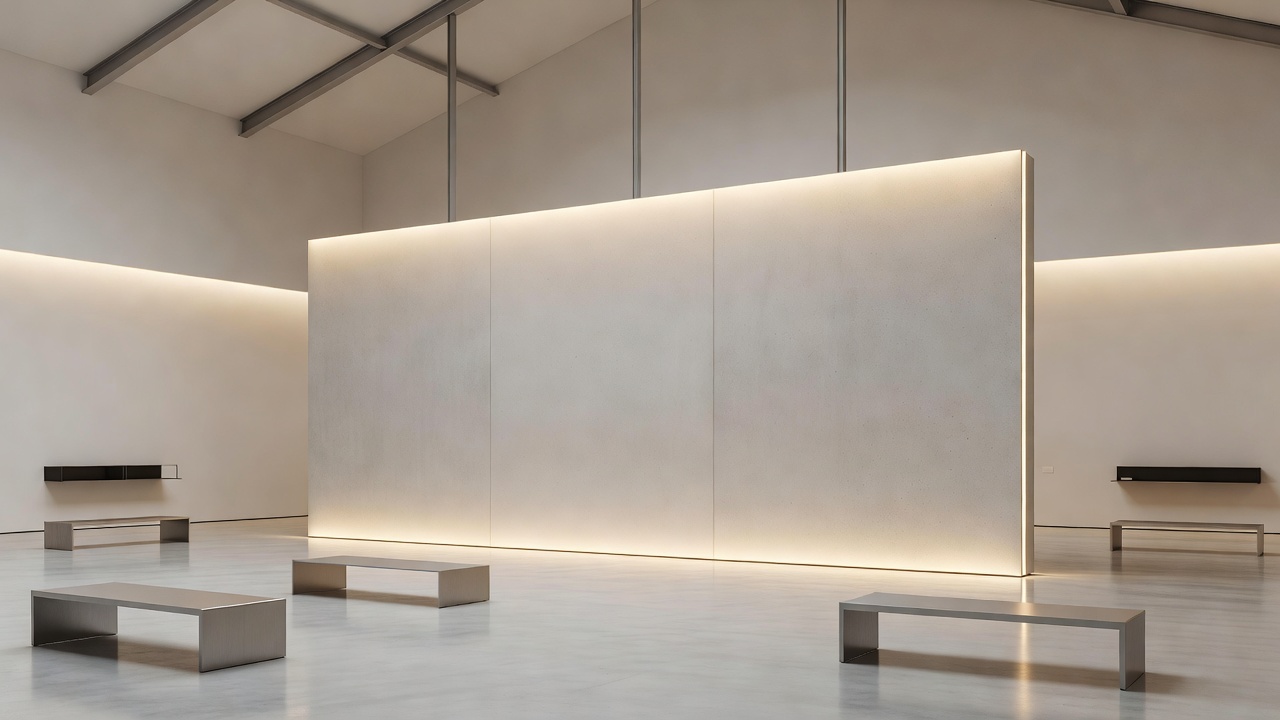
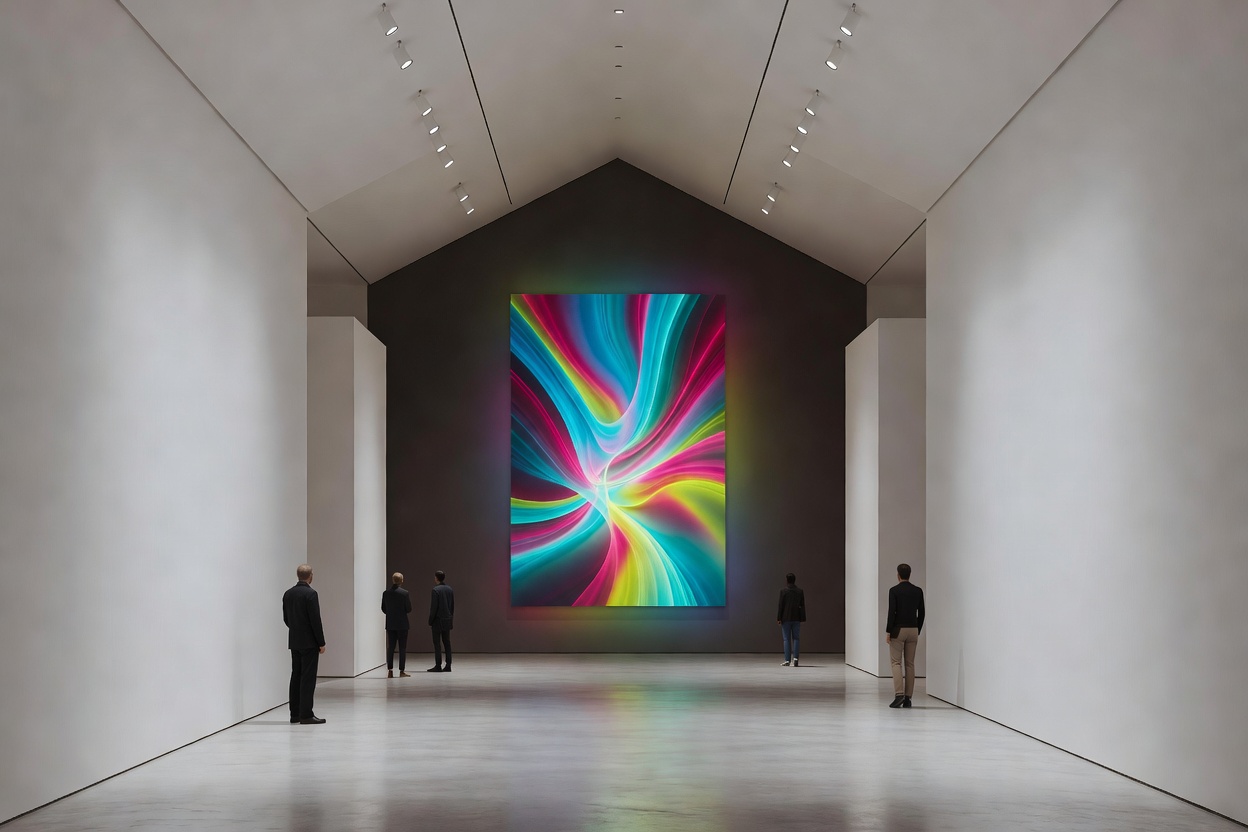
A digital work may be composed of light, sound, code, moving image or a responsive system, but visitors meet it somewhere specific. Ceiling height, wall finish, ambient brightness and the distance between a viewer and a projection all influence what can be perceived. A room can make an image feel monumental or intimate; it can support concentration or make the work compete with circulation noise. Treating space as part of the curatorial argument therefore begins with observation rather than decoration.
Start by asking what the work needs to be legible. A projection with delicate tonal differences may need controlled ambient light, while a bright display can remain readable in a more open setting. Sound-based works raise additional questions: will audio spill into neighbouring zones, and can a visitor find a position where listening is comfortable? These are not merely technical matters. They shape the social character of viewing, including whether people can linger without obstructing someone else.
Build a route, not a bottleneck
Circulation is an interpretive tool. A visitor who encounters an artwork from a doorway receives a different first impression from someone who approaches it gradually around a corner. Designers can use thresholds, sightlines and pauses to guide attention, but should avoid creating unnecessary confusion. A route should make it possible to enter, observe, step aside and leave without forcing every visitor through a single narrow position.
Consider the full body in the room: wheelchair turning space, standing and seated viewing heights, resting places, companion positions and the needs of people who may want to watch from a quieter edge. A crowd can become part of a live work, but crowding should not be the only way to participate. Where the artwork permits it, create more than one useful viewing position. Clear wayfinding and a visible exit reduce the effort required to understand the space.
Light, surface and scale
Digital images meet physical surfaces. Projection on a matte wall, a scrim, a floor or a sculptural screen produces different edges, contrast and shadows. Surface choice affects the image and the room’s atmosphere; it can also affect maintenance, installation time and future re-presentation. Record why a surface was chosen, how it was prepared and which conditions are essential. Such notes help preserve the work’s intended relationship to its environment without insisting that every future presentation reproduce a single historic room.
Scale should be considered in relation to attention, not simply spectacle. A very large image can invite bodily awareness, but may be tiring when viewed close up. A small luminous work may reward a deliberate pause and a more intimate threshold. Provide a useful range of distances wherever possible. Test the composition from the actual routes visitors will use, including seated sightlines and the views available to someone arriving while another group is already present.
Coordinate the technical and curatorial brief
A spatial plan becomes stronger when curators, artists, registrars, conservators, AV technicians, access specialists and facilities teams can review it together. Agree on power, cable routes, ventilation, projector throw, mounting, network needs and safe maintenance access early. Keep operational equipment discreet, but do not conceal it so completely that staff cannot inspect or service it. A quiet, reliable system is a form of hospitality: it lets visitors attend to the artwork rather than to avoidable interruptions.
Make a floor plan and a short installation record. Include dimensions, equipment positions, light levels or other relevant environmental conditions, sound relationships, accessible routes and a description of the visitor’s approach. Photograph test positions and note any compromises. The record should distinguish essential qualities from adaptable choices. This gives later teams room to respond to a new building while retaining the work’s significant spatial logic.
Think in relationships
The most considered digital rooms balance invitation and restraint. They allow an artwork to be encountered at an appropriate pace, give visitors meaningful choices about where to stand, and leave enough space for difference in perception. A room need not be expensive or technologically elaborate to feel carefully composed. Its quality comes from the clarity of the relationship between image, sound, architecture and people.
For further context, consult the collection and interpretation resources of Tate, the Museum of Modern Art, the Solomon R. Guggenheim Museum and ZKM | Center for Art and Media Karlsruhe. Their published material offers varied examples of institutions thinking about media art, display and public encounter; it should be read alongside the specific requirements of each artwork and site.