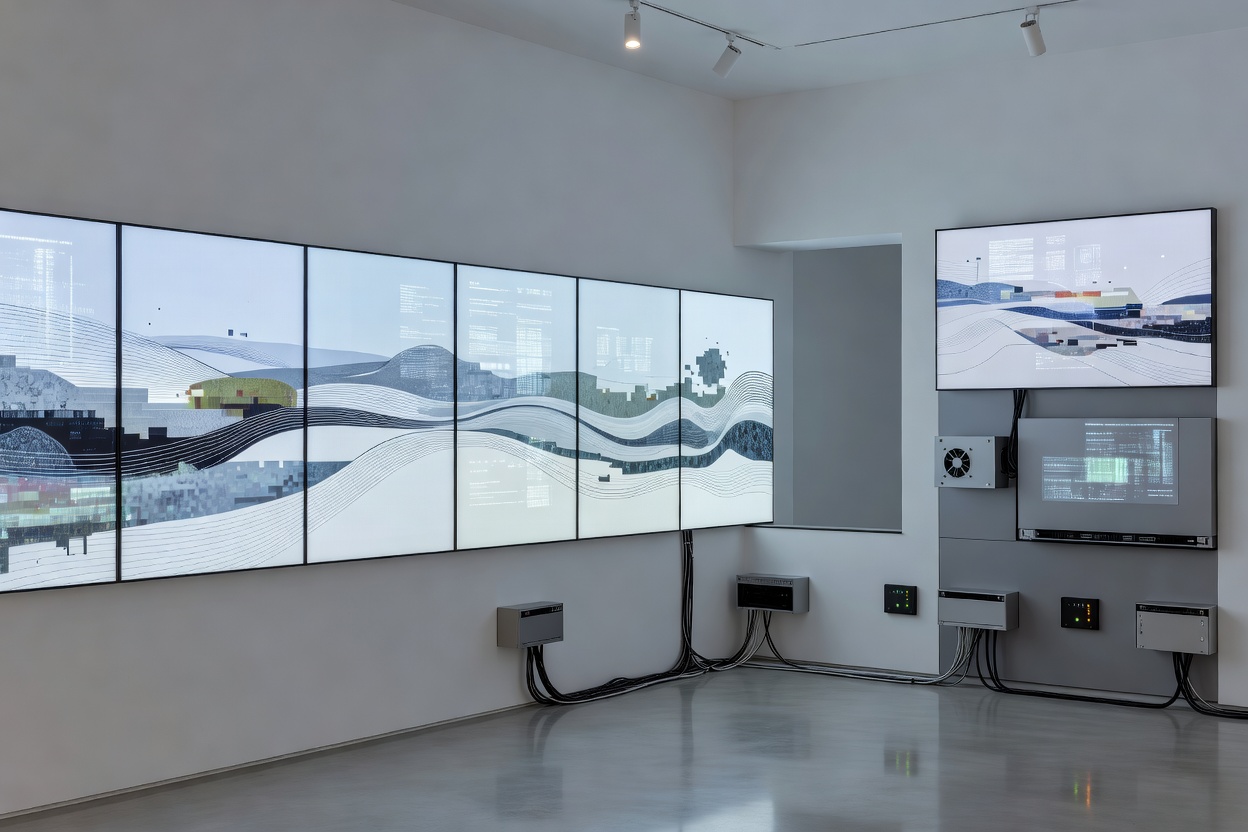
Preservation as a continuing practice
Define what matters before something fails
Digital and time-based artworks can rely on hardware, software, networks, files, display devices, operating systems and particular conditions of presentation. These elements age at different rates. A screen may remain functional after its colour profile has shifted; a software dependency may disappear even while the original file remains readable. Preservation begins by identifying the work’s significant properties: the qualities that must continue to be experienced or understood for the work to remain itself.
Those properties are not always obvious from a technical inventory. For one artwork, a precise timing relationship may be essential. For another, the experience of navigating a particular interface may matter more than the exact model of monitor. Consult the artist, studio, collection records and people involved in earlier presentations. Ask what can change, what cannot, and what would constitute an acceptable re-presentation. Record answers with dates and context so later teams can distinguish original intentions from subsequent decisions.
Document the work as a relationship
A useful record extends beyond a list of equipment. Include media files and their formats, software and dependencies, hardware specifications, connection diagrams, installation dimensions, sound requirements, environmental conditions, display settings, interaction rules and reset procedures. Note the role of each component: essential, replaceable, preferred or incidental. Include clear instructions for routine checks and safe shutdown, along with contacts or knowledge holders where appropriate.
Documentation should also describe the visitor experience. What is seen or heard first? How does a sequence unfold? What happens when a visitor leaves? How does the system behave during idle periods? A short video or set of installation photographs can capture relationships that a text description misses, but media records should be clearly labelled and connected to the relevant version of the work. Keep documentation legible, backed up and reviewed as the work is reinstalled.
Compare preservation approaches thoughtfully
| Approach | What it can support | Questions to record |
|---|---|---|
| Maintain original equipment | Continuity with a known presentation system. | Can parts be serviced, and what is the safe operating condition? |
| Emulate an earlier environment | Access to software behaviour on later hardware. | Which behaviours are accurate, and where are the limits? |
| Migrate files or software | Continued access in current formats or systems. | What changes in appearance, timing, interaction or sound? |
| Reconstruct or reinterpret | A documented version when original dependencies are unavailable. | Who approves changes, and how is the new version identified? |
No single approach suits every work. Maintaining original equipment can preserve familiar behaviour but may become unreliable or unsafe. Emulation can reproduce an earlier software environment while introducing differences in display or timing. Migration can help files remain accessible but may alter their appearance. Reconstruction may be necessary when components have disappeared, yet it requires careful artist or collection consultation. Treat these options as decisions to document, not as automatic upgrades.
Build dependable presentation into the plan
Technical reliability is part of the visitor’s experience. Before public presentation, test the full installation under realistic conditions. Confirm that equipment has sufficient ventilation, cables are safely routed, files open correctly and sound or network dependencies work as expected. Agree who checks the work, how often checks occur and what staff should do if a component behaves unexpectedly. Keep a spare plan for critical consumables where appropriate, but avoid substituting parts without considering colour, brightness, resolution or other significant properties.
Record every intervention. A maintenance log can note dates, observed issues, adjustments, replacements and the people involved. Keep original files untouched where possible, maintain checksums or other integrity records where the collection’s process calls for them, and store more than one copy in managed locations. Consider access controls and rights: technical preservation does not automatically grant permission to publish, modify or redistribute a work.
Decide how change will be explained
Some artworks are intentionally unstable, network-dependent or responsive to a changing environment. In those cases, preservation may mean maintaining the conditions for meaningful change rather than freezing one state. The record should say what variability is intentional and what would be a failure. Explain significant changes to future audiences in accessible language. A transparent account can deepen interpretation by showing how a work’s material life is shaped by time, tools and decisions.
Resources from the Variable Media Network, Matters in Media Art, Rhizome’s ArtBase and the Smithsonian’s conservation resources provide useful starting points for discussion. They offer frameworks and examples, not universal prescriptions. Each artwork needs a plan grounded in its own materials, rights, intentions and history.
Stewardship supports continuity, not perfection
Care does not guarantee that a digital work will remain unchanged indefinitely. It makes decisions visible and equips people to respond with evidence rather than guesswork. A thoughtful plan records the experience, protects the materials, supports responsible technical choices and acknowledges uncertainty. That is how a gallery can preserve room for future encounter while respecting the work’s history.