Questions Before You Enter
Useful questions for visitors, curators and collectors thinking about digital artworks and the rooms that hold them.
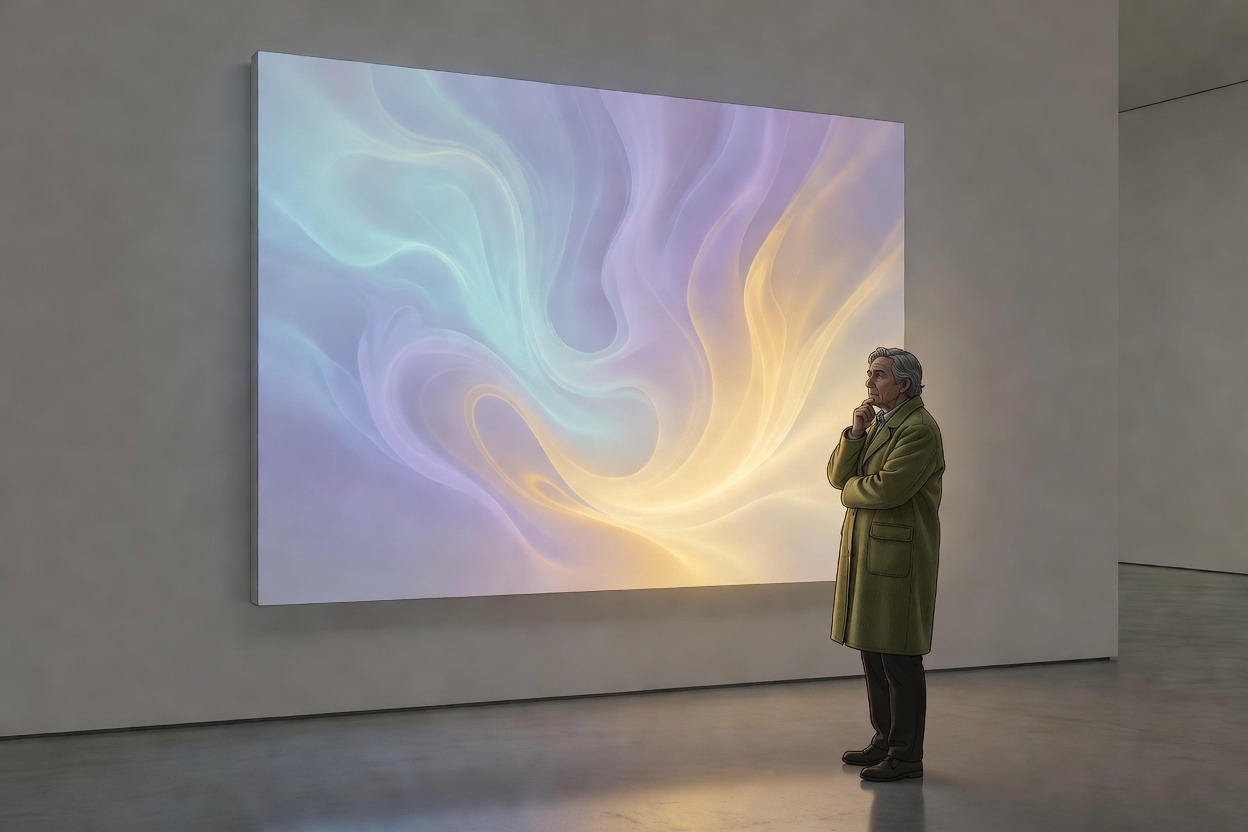
What is a digital art exhibition space?
It is a setting where digital artworks are presented through a relationship among the artwork, architecture, technical systems and visitors. It may include projection, screens, sound, networked media or interactive elements.
Does interactive art expect me to participate?
Not always. Look for clear guidance about whether interaction is invited, optional or central. A well-considered presentation explains what actions do and offers a meaningful way to observe when participation is not wanted or possible.
Why does the room matter so much?
Light, scale, sound, surface, distance and movement affect what can be seen and heard. The room can shape the pace of looking and the way people share an encounter.
How can I prepare for sensory conditions?
Check any information provided about brightness, flashing imagery, sound, darkness, movement and crowding. If details are not available, ask the venue directly before making plans.
What does preservation mean for digital art?
It means documenting and caring for the work’s significant properties, materials, software, equipment and presentation conditions, then making informed decisions as technologies change.
Can a work be preserved if its original technology is obsolete?
Often, but there is no universal method. Maintaining original equipment, emulation, migration or reconstruction may be considered, with decisions documented and relevant artist or collection expertise involved.
What should a visitor know about sensors?
Where a work uses cameras, microphones or other sensors, clear interpretation should explain what is detected, whether data is retained and how the system is used. Ask staff if the information is not clear.
How can a gallery make an immersive work more accessible?
Plan clear routes, seating, readable interpretation, sensory information and different ways to engage. Test the actual installation with people who have varied access needs and respond to what they report.
Where can I read more about media art and access?
Explore published resources from Tate, MoMA, ZKM, Rhizome, the Variable Media Network, Matters in Media Art, the Smithsonian, W3C and Arts Council England. Follow each resource to its source and consider its date and context.
References to continue with
- Tate · Museum of Modern Art · Solomon R. Guggenheim Museum
- ZKM | Center for Art and Media Karlsruhe · Rhizome · Variable Media Network
- Matters in Media Art · Smithsonian Institution · W3C Web Accessibility Initiative
- Victoria and Albert Museum · SFMOMA · LACMA
- e-flux · National Endowment for the Arts · Arts Council England